
Inspiring curiosity through confidence
The theme of British Science Week 2026 is “Curiosity: what’s your question?”, but before curiosity, comes confidence.
It is widely understood that confidence is a key mechanism which underpins curiosity, thus a key outcome of our Festivals of Chemistry programme, and indeed, embedded within many of our other strands of work, is confidence.
It is our role in building confidence in young people which, in turn, allows their curiosity to spark – prompting them to begin their journey in chemistry.
We encourage young people to embark on this journey as early as possible – with our programmes and resources spanning all four Key Stages of compulsory education, and our awards schemes continuing to instil confidence and encourage curiosity across further and higher education.
Empowering young people with confidence in chemistry.
KS1 and KS2
Whilst chemistry concepts are still subsumed under “science”, the Experiment Resources section on our website invite younger learners to explore general concepts of science using everyday kitchen ingredients (and the help of an adult!).
Besides the developmental benefits, such as fine motor skills, which come with introducing practical science in primary school, learners are also encouraged to develop scientific practices including measuring, planning an enquiry and making predictions. Embedding these practices early sets younger learners up for later educational confidence, as they enter secondary school with the basic understanding of how to approach a scientific enquiry. In turn, this allows students to explore their curiosities with confidence – not only by asking “why?”, but also by understanding the process used to find the answers to their “why?”.
Through practical science, young learners are guided through how to think about the world around them in a wider context, to question what they see, and to have the confidence that the curiosity they show will not only be acknowledged, but will be the catalyst to broader conversation.
KS3
This is the period of education where science often ceases to be heavily practical based, replacing hands-on lessons of general science with theory and concepts increasingly differentiated between the three sciences. The Salters’ Institute’s Chemistry Club offers a different perspective on chemistry.
Instead of linking chemistry to a concept, we offer the opportunity to learn about chemistry through a context-led approach. Where so many school curriculums are founded on a concept led approach, providing an opportunity for a different approach not only allows students to see the real-life applications of chemistry but also allows for a separation from their school curriculum. This separation fosters confidence, as their areas of interest are no longer linked to exam results and points on a syllabus.
In addition, as our Chemistry Club activities are neither scored nor timed, students can complete them at their own pace. Again, this cultivates a safe environment where students feel confident to have a go, along the way discovering new ideas about chemistry and sparking their curiosity.
KS4
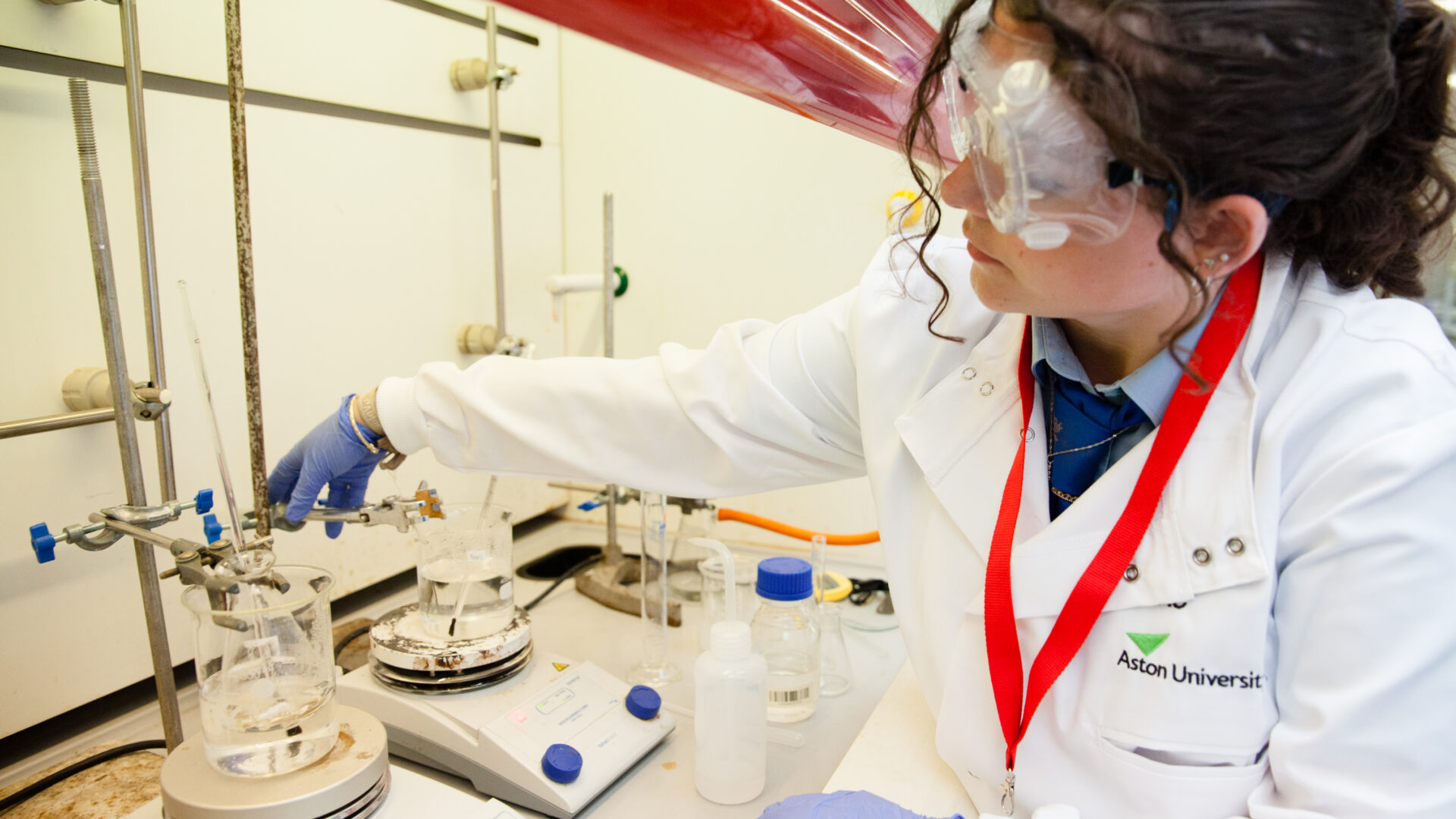
Our in-person outreach programme, Festivals of Chemistry, gives KS4 students the chance to visit a university campus, get hands-on doing practical chemistry in a university laboratory, and attend a variety of Q&A sessions. A key outcome of these days is confidence growth in students.
In the unfamiliar setting of a university-level teaching lab and in front of high level academic speakers, it is important to ensure students first feel comfortable, so they then feel empowered to be curious. In our Q&A sessions, we use postcards to enable students to write their questions anonymously, which allows students to feel more at ease engaging with the session than if they were expected to contribute verbally. This is not to undermine the impact and necessity for oracy in science, which is almost intrinsically linked to lab work, but instead allows students to build their confidence from a position of “safety”.
This confidence is then brought into the following lab session, where students work in pairs to carry out an experiment, independent from the supervision of their teachers. This independence also plays a part in building the confidence of students attending a Festival of Chemistry Discovery Day. Away from the academic expectations of their teachers, students feel confident to ask the lab demonstrators questions.
Our goal is that students return to school with a growth in confidence, feeling enabled to honour their curiosity by continuing to ask questions and engage deeper with chemistry.
Further and Higher Education
Our further and higher education provision embeds confidence and rewards curiosity through our various awards. From recognising and celebrating the achievements of students scoring top in our Salters’ A Levels, to encouraging curiosity in undergraduates through awarding summer research project funding, and acknowledging confidence and leadership qualities in graduates, the Salters’ Institute Awards programme underpins our aims to promote curiosity through confidence in the final stretches of education.